

Imran’s fall, Munir’s rise and the dangers of a dysfunctional Pakistan
Indian Express
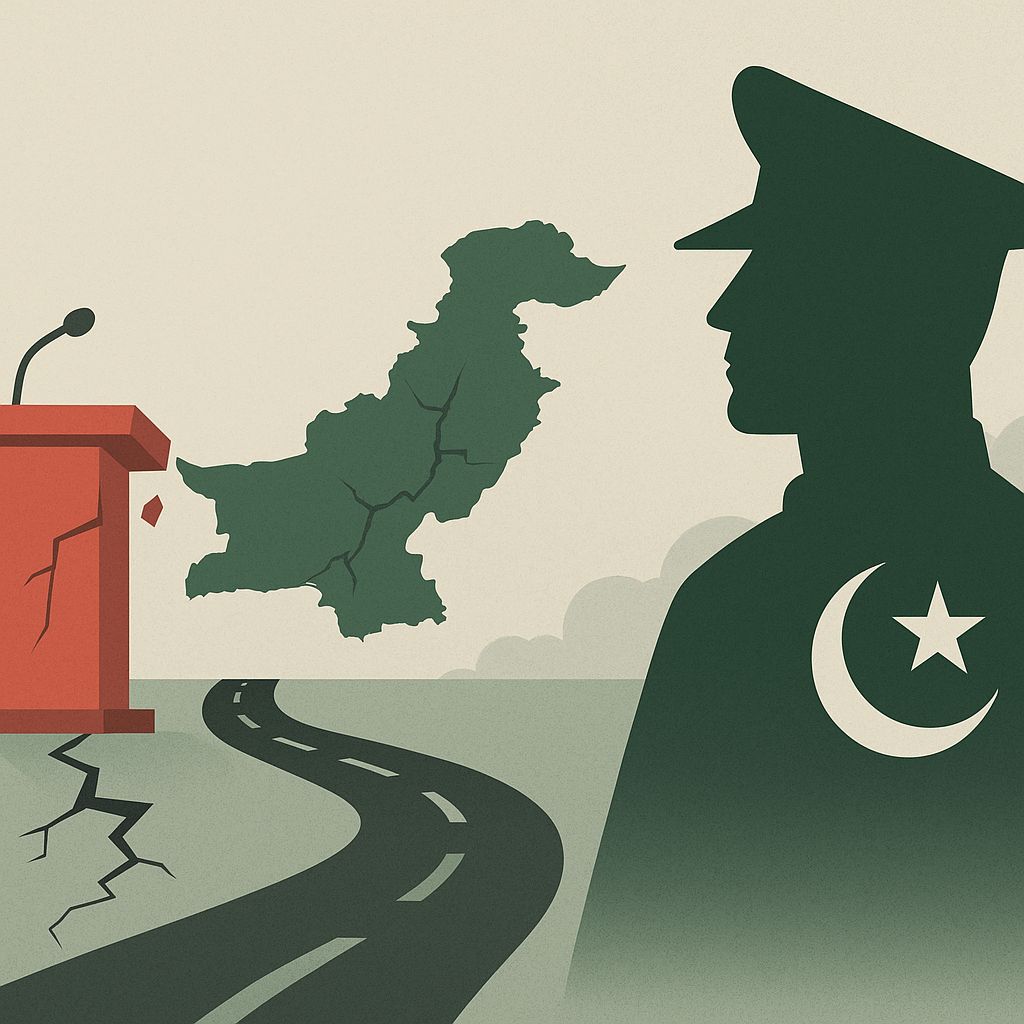
I. AUTHOR’S CENTRAL ARGUMENT
The article argues that Pakistan’s present political crisis—marked by Imran Khan’s downfall, General Asim Munir’s rise, and Shehbaz Sharif’s fragile civilian leadership—reflects a chronic, structural dysfunction rooted in the military’s domination of politics, weak civilian institutions, economic distress, and an unstable foreign policy environment. The author contends that Pakistan’s volatility has severe implications for South Asia, particularly India, and that sustained instability has made Pakistan dangerously unpredictable.
The central thesis: Pakistan’s entrenched civil–military imbalance and systemic fragility prevent stable governance, fuel recurrent crises, and pose long-term strategic risks for India and the region.
II. KEY ARGUMENTS PRESENTED
- Pakistan’s Crisis Is Structural, Not Episodic
– The current unrest is not merely a reaction to Imran Khan’s ouster but rooted in decades of military dominance and weak civilian institutions. - Imran Khan’s Fall Was Driven by the Military and Judiciary
– His corruption cases, disqualification, and incarceration reflect political engineering rather than purely legal processes.
– His popularity made him a threat to the military’s dominance. - General Munir’s Ascendancy Marks a Consolidation of Military Control
– Munir is portrayed as the architect of Pakistan’s present political restructuring.
– His tenure will likely tighten the military’s grip on national security, foreign affairs, and domestic politics. - Shehbaz Sharif’s Government Is Weak and Dependent
– Shehbaz is heavily reliant on the military; his authority is limited.
– This makes civilian governance nominal rather than substantive. - Civil–Military Imbalance Undermines Democracy
– The military shapes political outcomes, weakens democratic legitimacy, and destabilises elected governments. - Pakistan’s External Relations Are Becoming More Complex
– Relations with the US, China, Saudi Arabia, and UAE have become less predictable.
– Economic distress weakens Pakistan’s leverage with donors and strategic partners. - Economic Crisis Deepens Political Instability
– High debt, inflation, low growth, and dependency on IMF bailouts keep Pakistan in perpetual economic vulnerability. - Pakistan’s Instability Has Strategic Consequences for India
– India must prepare for an unpredictable neighbour that mixes political volatility with external adventurism and covert hostility.
– Weak civilian leadership increases risks of miscalculation along borders.
III. AUTHOR’S STANCE AND POSSIBLE BIASES
- Strongly Critical of Pakistan’s Military Dominance
– The author frames the army as the primary source of dysfunction, sometimes glossing over civilian political failures. - Indian Strategic Lens
– The analysis leans toward India’s security concerns, which shapes the tone and selection of arguments. - Understates Internal Socioeconomic Drivers
– Ethnic grievances, provincial imbalances, youth unemployment, and extremism are not examined in depth. - Focus on Elite Politics
– Discussion centres on Imran, Munir, and Shehbaz without analysing broader public sentiment or democratic aspirations. - Pessimistic Outlook
– The author adopts a bleak assessment of Pakistan’s prospects, offering limited discussion of reform possibilities.
IV. PROS OF THE ARTICLE (Strengths)
1. Sharp Insight Into Pakistan’s Civil–Military Dynamics
– Captures how the military controls political transitions and policy directions.
2. Clear Explanation of Pakistan’s Current Power Structure
– Helps readers understand the roles of Imran, Munir, and Shehbaz in shaping the crisis.
3. Integrates Domestic and External Drivers
– Connects internal instability with foreign policy volatility, especially China, US, Saudi Arabia.
4. Strong Strategic Relevance for Indian Readers
– Highlights how Pakistan’s dysfunction affects regional security architecture.
5. Accurate Depiction of Economic Fragility
– Notes debt distress, IMF conditionalities, and loss of international credibility.
V. CONS OF THE ARTICLE (Critical Gaps & Limitations)
1. Oversimplifies Political Complexity
– Pakistan’s power dynamics involve judiciary, bureaucracy, religious groups, and provincial governments—not just army vs politicians.
2. Limited Discussion on Public Opinion
– Mass movements, Imran’s grassroots popularity, and youth mobilisation are underexplored.
3. Economic Dimensions Underdeveloped
– No detailed discussion of Pakistan’s energy crisis, agriculture issues, tax base collapse, or elite capture of wealth.
4. Foreign Policy Nuance Missing
– China–Pakistan shifts, US disengagement, Gulf realignments, and India–Pakistan diplomatic patterns require deeper analysis.
5. No Engagement With Long-Term Reform Pathways
– The article diagnoses but does not prescribe solutions for democratisation or institutional correction.
VI. POLICY IMPLICATIONS (UPSC GS-II & GS-III Relevance)
- India’s National Security Planning
– Must account for unpredictable leadership, military adventurism, and cross-border tension cycles. - Regional Diplomacy
– Instability in Pakistan affects SAARC, regional trade, and counterterrorism cooperation. - Border Management
– Increased vigilance along the LOC and International Border is essential. - Economic and Humanitarian Spillovers
– Instability could lead to refugee flows, trafficking, and narcotics challenges. - Climate and Water Diplomacy
– A dysfunctional Pakistan complicates Indus Waters Treaty engagements. - Emerging Great Power Competition
– US–China rivalry may further destabilise Pakistan and influence India’s strategic posture.
VII. REAL-WORLD IMPACT ASSESSMENT
- Pakistan’s Long-Term Instability Is Becoming Structural
– Chronic governance failures deepen mistrust between state and citizens. - Military Control Weakens Democratic Legitimacy
– Undermines civilian institutions, rule of law, and political accountability. - Economic Collapse Looms Persistently
– High debt dependency and fiscal mismanagement reduce Pakistan’s policy autonomy. - Foreign Policy Volatility
– Rapid oscillations between the US, China, Gulf countries create unpredictability. - Increased Security Risks for India
– Potential for escalation, proxy activities, or miscalculations near borders. - Regional Strategic Disequilibrium
– Afghanistan–Pakistan instability impacts Central Asia and Indian Ocean security.
VIII. BALANCED CONCLUSION
The article provides an incisive critique of Pakistan’s recurring political crises, accurately depicting the entrenched role of the military, economic vulnerabilities, and fragile civilian governance. It underscores that Pakistan’s dysfunction is not episodic but systemic, producing lasting strategic risks for South Asia.
However, the analysis could benefit from deeper exploration of socioeconomic drivers, regional variations within Pakistan, the role of civil society, and structural pathways for reform. The pessimism, while warranted, leaves little room for nuanced appreciation of Pakistan’s internal contestations and democratic aspirations.
Overall, the article is a valuable reminder that India must continuously reassess its Pakistan strategy in light of shifting power balances, domestic turbulence in Pakistan, and evolving great-power politics.
IX. FUTURE PERSPECTIVES (UPSC Mains-Ready Insights)
- Strengthen intelligence and border management mechanisms.
- Maintain diplomatic channels even in periods of volatility.
- Prepare for contingencies related to Pakistan’s economic or political collapse.
- Enhance regional partnerships to counterbalance instability.
- Support Track-II dialogue to reduce miscalculations.
- Monitor China–Pakistan developments closely.
- Deepen economic resilience along border states.
- Recognise that Pakistan’s internal dynamics will continue to impact India’s long-term strategic planning.
Pakistan’s crisis is structural, but India’s response must be strategic, calibrated, and forward-looking, rooted in national security interests and regional stability.
